 Log In




The One Thing High-Performing Veteran Leaders Keep Telling Me
They didn’t need more discipline. They needed one small hinge.
By Dr. Theresa Larson, DPT
Small Hinges, Big Doors
Last week I was in front of a room of GS-14 and GS-15 leaders (executive-level federal leaders on the General Schedule) at Warfighter Acquisition University. Before I said much of anything, I asked them a simple question: What do you actually want to get out of today?
Almost everyone said some version of the same thing: I want to know how to get back on track with my health. Life is busy. I’m on the road constantly. I don’t know where to start.
That’s not a discipline problem. That’s an accountability problem, and it’s exactly why we built Movement Rx around executive coaching for veteran leaders like the ones in that room.
At the end of every session, we go around the room and share a high, a wow, or a low. The same leader who’d asked the question that morning raised a hand again. This time it wasn’t a question. It was:
“I finally feel like I have a place to start.”
What changed in a few hours wasn’t their schedule. It was their thinking.
The Trap: All-or-Nothing Thinking
Most high performers get stuck in all-or-nothing mode. If I can’t train like I used to, why train at all? If I can’t eat clean on the road, why bother? It feels like discipline. It’s actually what keeps good people stuck.
Here’s a concept that sticks with leaders at this level:
Small hinges swing big doors.
You don’t need a new identity or a 5 a.m.-to-9 p.m. routine to get your health back. You need one small, consistent action, the kind that seems almost too small to matter, repeated long enough that it compounds.
Three Small Hinges to Try This Week
- Protein at breakfast, every day, no matter what the day looks like.
- One non-negotiable training session, even if it’s 14 minutes in a hotel gym. That’s 1% of your day.
- One check-in with a partner, a coach, or someone else before Friday.
That last one matters more than people think. High performers already know how to set a goal. What most have lost is a structure that holds them to it once the calendar gets ugly.
That’s the piece most health advice skips, and it’s the whole premise behind accountability coaching for executives: someone in your corner who won’t let momentum die the moment things get busy.
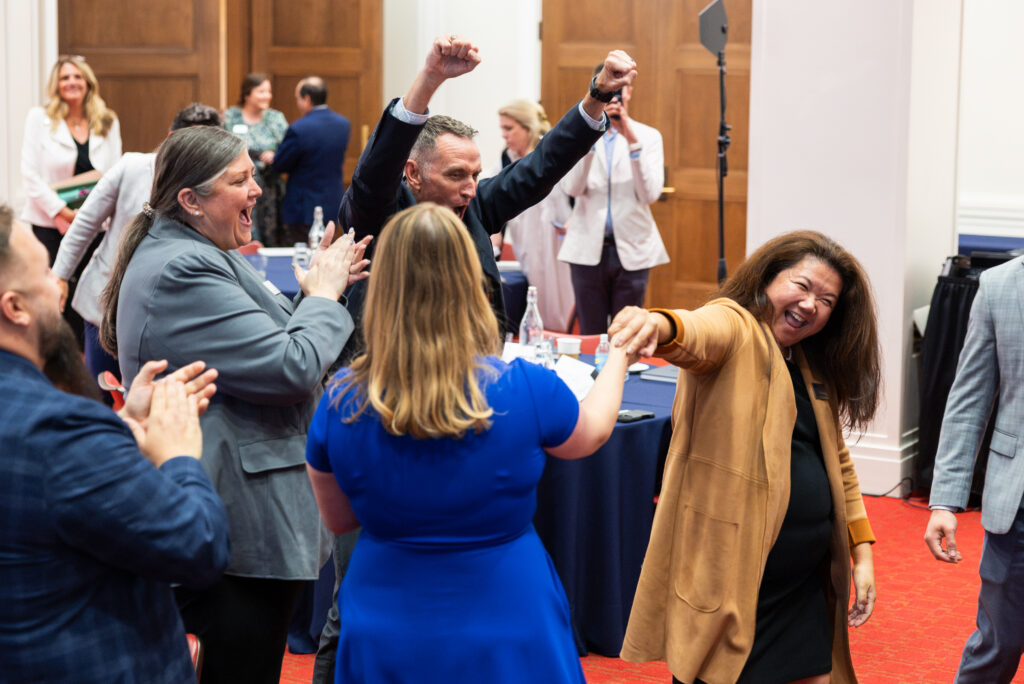
Picture taken at the George W. Bush Presidential Leadership Institute June 2026 during Cohort 8’s Stand to Veteran Leadership Program
Your Next Door
If you’re a veteran leader who’s used to leading everyone else, and you quietly let your own health slide while you did it, this is your reminder that you don’t need the whole plan today. You need the next small hinge.
If you want a partner to help you find it, that’s what our concierge executive coaching is for.
If this resonates, let’s find your starting point together. Connect with me and we’ll answer your questions and talk through your goals. No pressure, just a conversation.
Can’t find a time that works? Email contact@mrxleadrs.com and we’ll get back to you with more availability.
To your next door,
Dr. T
P.S. If you know a veteran leader in the same spot (busy, high-performing, and quietly overdue for their own health), forward this along. Executive coaching for veteran leaders isn’t about doing more. It’s about doing the one right thing next.